Scissors, Glue, and the Magic of the Messy Middle
There is something deeply grounding about the sound of paper shearing beneath a pair of sharp blades. Long before timeline markers and keyframes governed my daily life, there was just a tabletop littered with clippings, a roll of sticky tape, and hours that seemed to stretch out indefinitely. As a kid, I was permanently obsessed with cutting up magazines and cardboard, building clumsy, wonderful little constructions that made sense only to me.
It is always fascinating how the things we love in childhood find a way to metamorphosize into adult pursuits. We circle back to them simply because they feel like home. Today, that early fascination with collage and cutting out sits right at the heart of everything we do at Plume Films.
Bringing disparate, unconnected elements together and forcing them to inhabit a brand new environment is genuinely thrilling. It is a process of discovery, of sliding pieces across a surface until a hidden relationship reveals itself. And when you take that tactile sensibility and translate it into animation, it becomes something else entirely.
Why Pre-Digital Texture Still Matters
In a world that constantly pushes for hyper-polished, frictionless digital perfection, there is an urgent, human charm in things that look like they were made by actual hands.
Collage transcends mediums effortlessly. It bridges painting, print, magazines, and even vector shapes, binding them together with a shared sense of texture. I love the physical reality of pre-digital collage, where things were messy with glue, slightly misaligned, and unapologetically tactile. That imperfection gives visual storytelling a pulse. It lets the viewer feel the friction of the process, reminding them that human beings spent time arranging every single fragment.
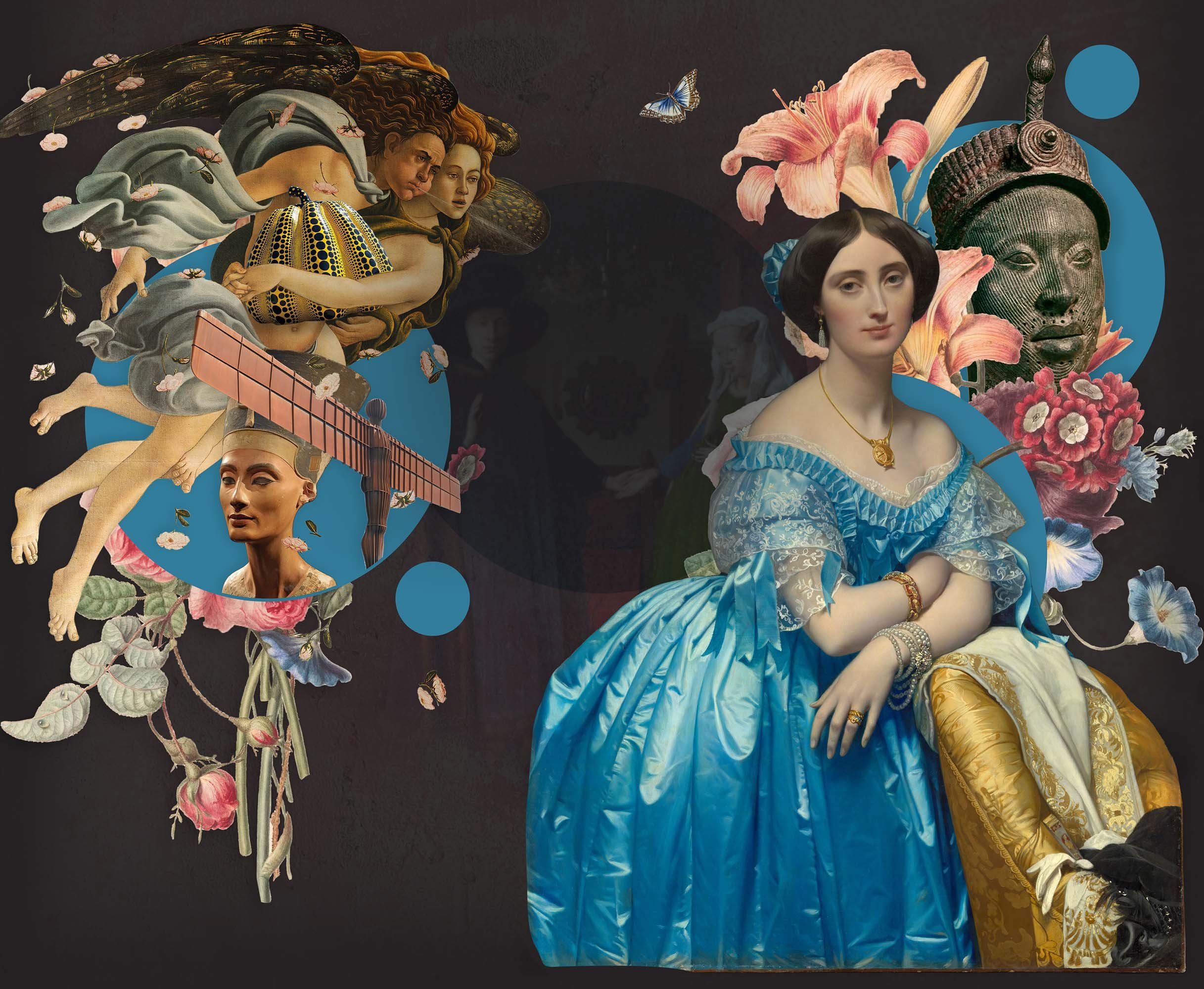
Not every experiment makes it out into the world, of course. Creative work is full of paths not taken, and ideas that served their purpose simply by helping us figure out what we actually wanted to say.
Take this piece I worked on for London Art Studies a while ago. It was ultimately set aside as we moved in a different direction and found better success with other approaches for that specific brief. But looking at it now, I still have a real fondness for it. It captures that pre-digital, scissors-and-glue energy that reminds me why I fell in love with visual storytelling in the first place.
The Joy of the Unplanned Discovery
There is a freedom in working this way. When you rely entirely on digital tools, it is easy to fall into the trap of endless tinkering, tweaking sliders until all the life has been ironed out of a frame.
Collage forces you to commit. Once a piece of paper is cut, it has a definite shape and a physical weight. You have to work with what is in front of you, embracing happy accidents, unexpected juxtapositions, and the rough edges that emerge when things do not quite line up neatly. Those are precisely the moments where character and emotion creep into a film.
Storytelling, at its core, is about connecting things that initially seem unrelated to forge a new perspective. Whether we are building a handmade animation piece or shaping a narrative for a brand, we are simply arranging fragments until they start to breathe together.
If you are interested in exploring a project with us, or just want to chat about the craft of tactile filmmaking, do get in touch.